Karnama – Work Management for Social Media Agencies.
Web app and Android app for a social media agency: orders with a live Kanban board, time tracking via QR code, leave, sales packages, publishing schedule, CRM and client portal.
Karnama – Work Management for Social Media Agencies
Web app and Android app for a social media agency: orders with a live Kanban board, time tracking via QR code, leave, sales packages, publishing schedule, CRM and client portal.
About the project
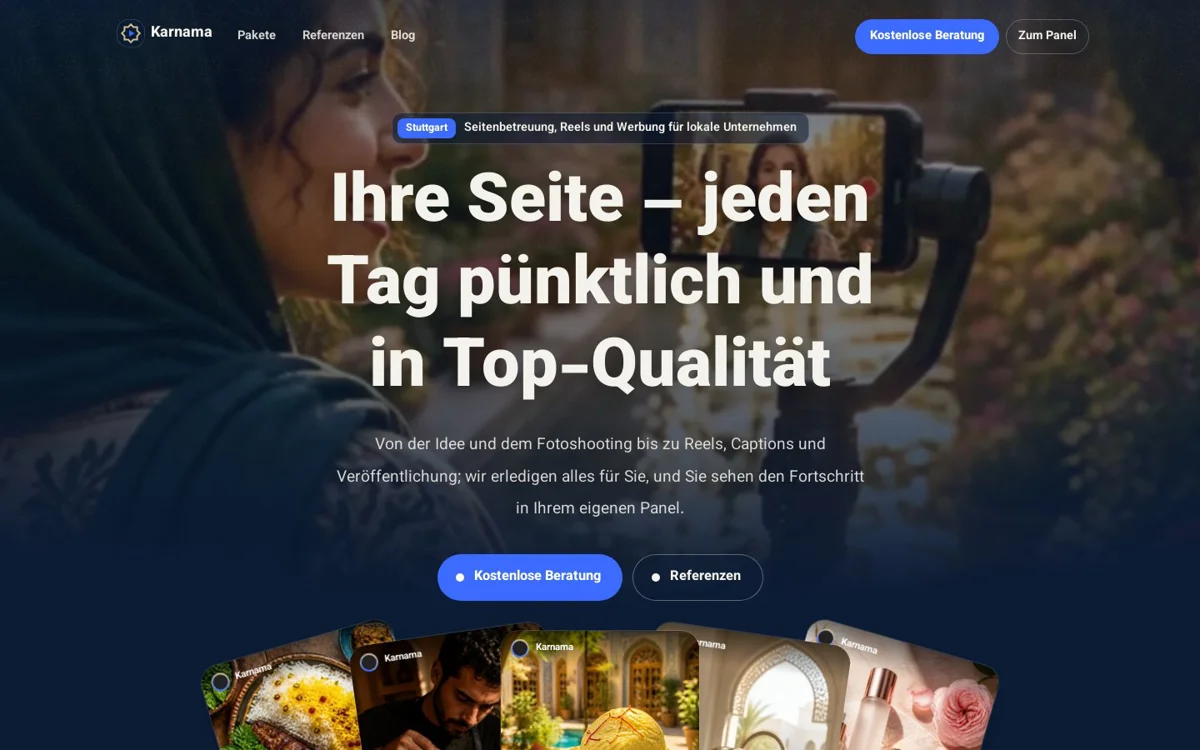
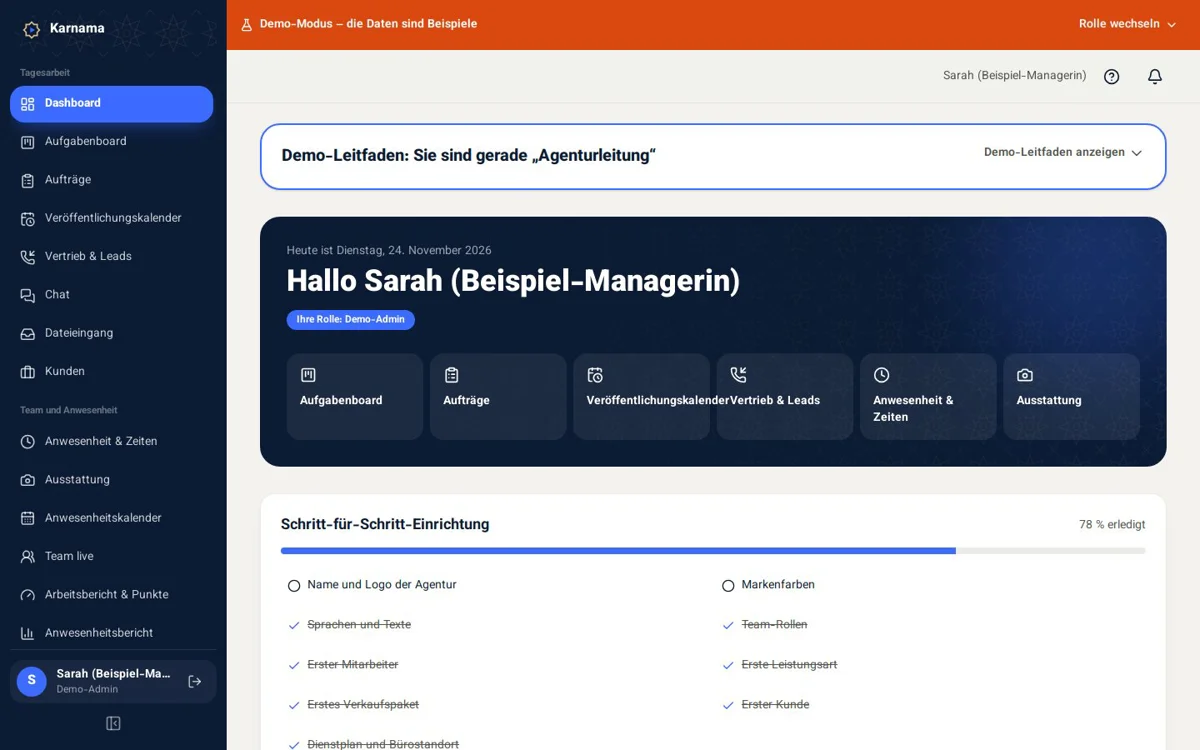
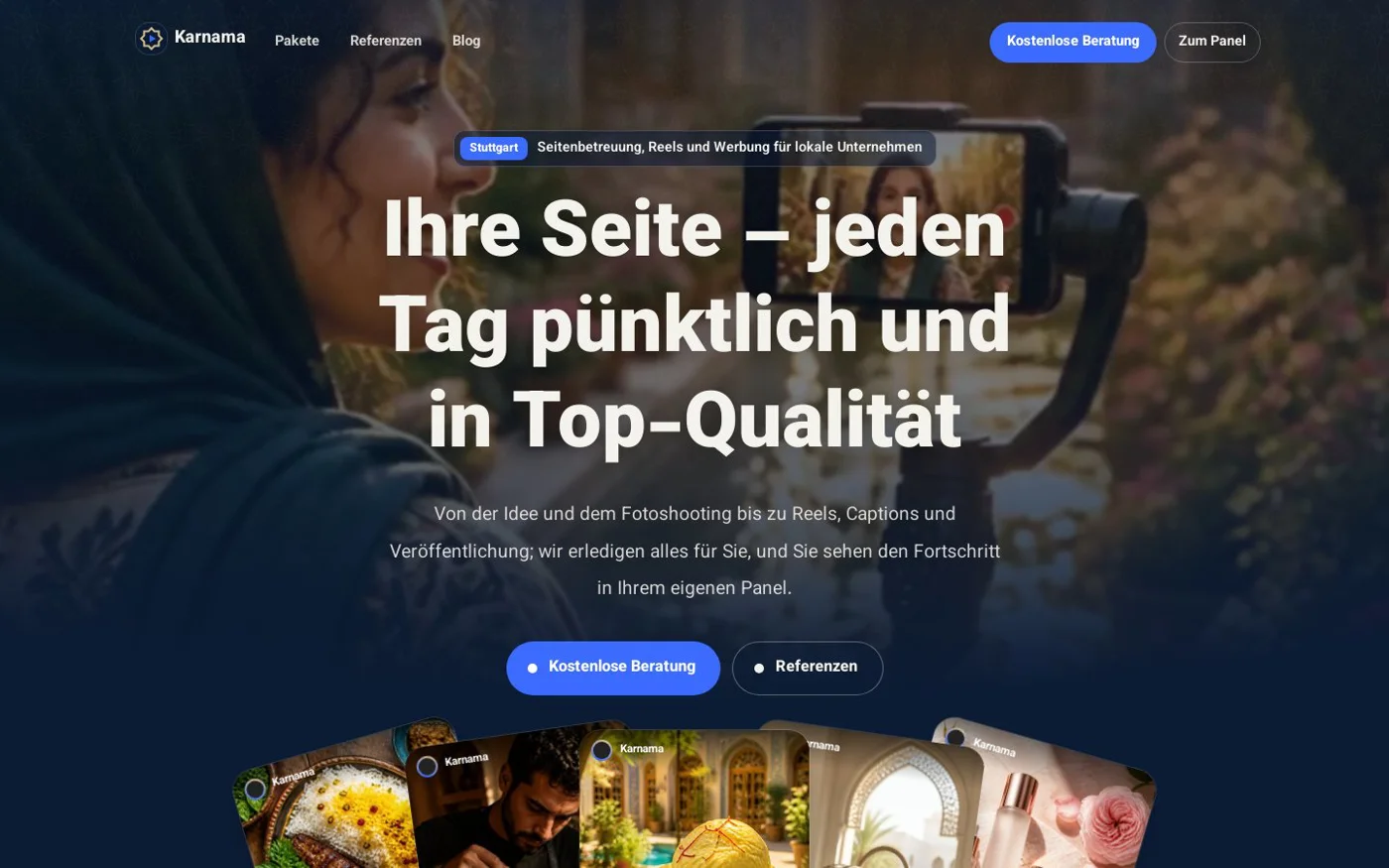
Karnama organises the entire working day of a social media agency in one place: a client orders reels, posts or captions, the manager assigns the tasks, the team works through them on the live Kanban board and the client approves the results in their own portal. On top of that come time tracking, leave, sales packages, a publishing schedule, sales and a public website with a blog.
The interface was originally Persian (RTL, Persian calendar, toman). The live demo shows the German version with the fictional agency “Karnama” in Stuttgart, using euros, Berlin time and German mobile numbers; the Persian version lives in the “persisch” branch.
Technical implementation
Back end with ASP.NET Core (.NET 10) in Clean Architecture, EF Core with PostgreSQL 16, Redis/HybridCache, SignalR for live updates, Hangfire for scheduled jobs, FluentValidation and Serilog. The front end is Next.js 16 with React 19, TypeScript and Tailwind 4; the same code base becomes the Android app with Capacitor 8. The demo runs as a Docker container on my own server behind Caddy – website, API and app share the same address.
Key Features
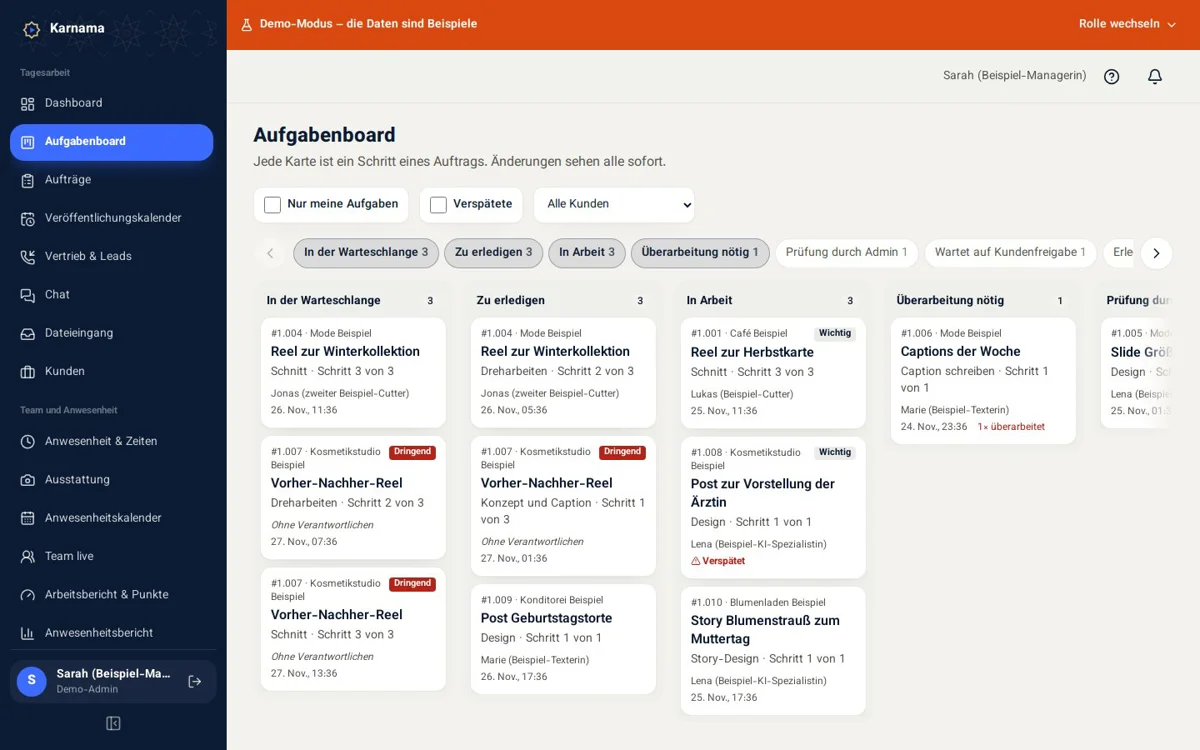
- Orders & Kanban: The client orders, the manager assigns, the team works on the live Kanban board – with a review loop and client approval.
- Working time: Clock in and out via a rotating QR code, GPS or time clock, with a timer per task.
- Leave & absence: Absences and late arrivals are detected, leave by the day or hour, monthly report as Excel.
- Packages & client portal: Sales packages with quotas; the client sees progress and remaining term and approves content.
- CRM: Leads from the website, round-robin assignment, call log and follow-ups.
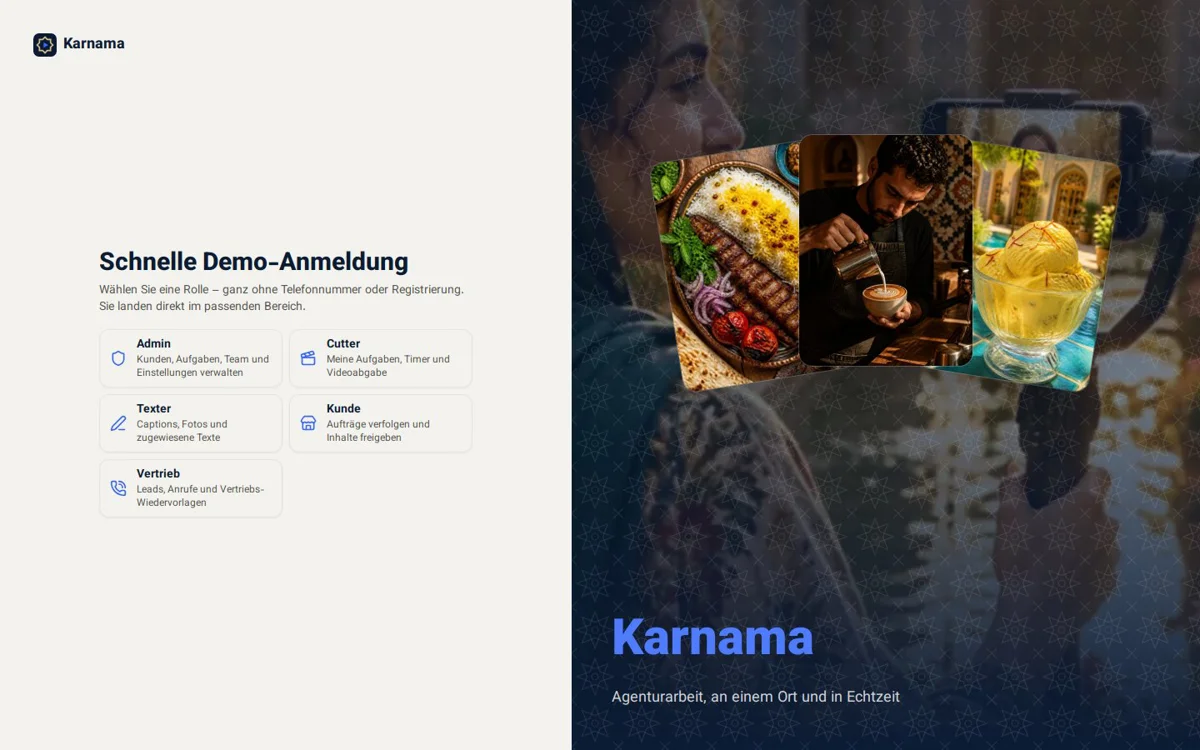
- Android app: The same interface as an app, with role buttons for sign-in in the demo.
My Role
The idea, staged requirements, architecture and security rules and every decision came from me; I tested and reviewed each stage. I had the code written through vibe coding in dialogue with Claude.
Architecture
Domain (entities, state machines for orders) → Application (use cases, DTOs, validation) → Infrastructure (EF Core, cache, storage, encrypted vault) → Api (minimal API, auth, SignalR hub) + Worker (scheduled jobs, outbox) → Next.js website, panel and Android app.
Challenges
Many roles with different permissions, working time that must not be faked, and a team working on the same orders at the same time – without double clicks or dropped connections leading to wrong data.
Solutions
Dynamic roles with permission scopes (own / assigned / all), a rotating QR code on the office tablet and GPS with fake-location detection, state machines for orders and tests with 83 simultaneously simulated people over a full working day.
Code Highlight
Live-Kanban mit Prüfschleife und Kundenfreigabe · Zuteilungs-Vorschlag nach Rolle und Auslastung · QR-/GPS-Zeiterfassung mit Offline-Warteschlange · Telegram-Bot für Videoabgaben · CRM mit Rotationsverteilung · 210 xUnit-Tests gegen echtes PostgreSQLKey Learnings
Planning and reviewing large projects in stages · Clean Architecture with PostgreSQL · Real time with SignalR · Web and Android from one code base · Load and scenario tests · Translating a whole app into German
// Detail views